
ACL Tear Treatment in New York
Comprehensive, personalized care to restore knee stability after an ACL tear, with or without surgery.
An ACL tear doesn't have to end an active lifestyle.
Has a torn ACL left you struggling with instability, buckling, or persistent pain and swelling in your knee? ACL tears are one of the most common knee injuries, affecting an estimated 200,000 Americans each year. With prompt diagnosis and the right rehabilitation plan, an ACL tear doesn't have to mean the end of an active lifestyle.
Most ACL tears occur in people younger than 35, often during pivoting sports like soccer, basketball, and skiing, and research shows women tear their ACL at a notably higher rate than men playing the same sports. Left unaddressed, the instability that follows carries real long-term risk: without proper treatment, the large majority of ACL-deficient knees go on to develop osteoarthritis within 10 to 20 years.
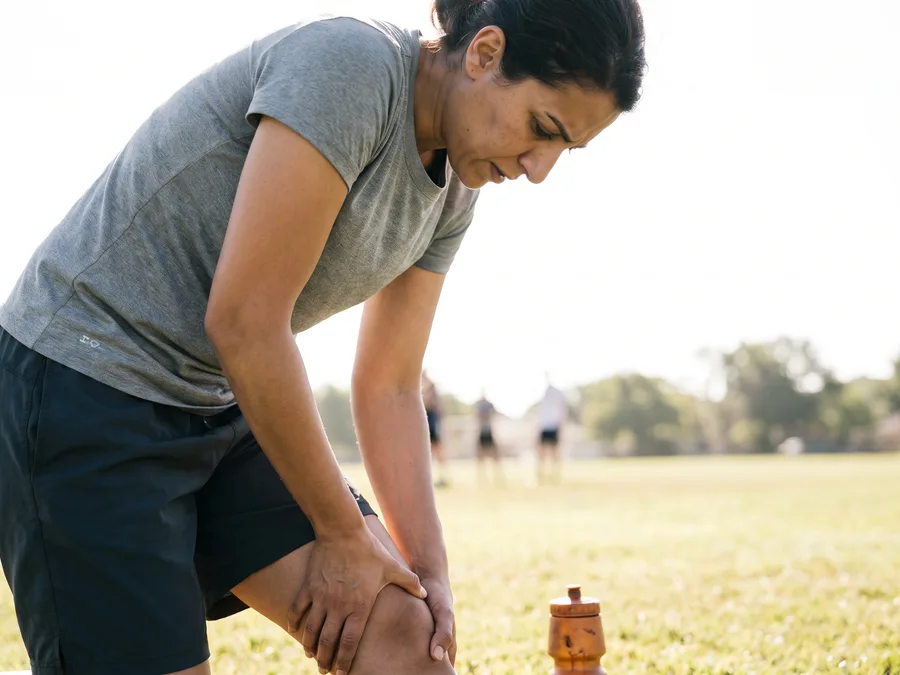
Signs your knee's stability has been compromised.
How your knee behaves during specific movements tells us a great deal about the extent of the injury before the first hands-on assessment.
Knee Buckling or Giving Way
A hallmark sign of ACL instability: the knee gives way specifically during pivoting or cutting movements.
Pain and Swelling
Acute swelling and pain follow the initial injury and often recur with activity if the knee isn't properly rehabilitated.
Limited Knee Bending
Pain, swelling, and muscle inhibition restrict how far the knee can bend in the early stages after injury.
Difficulty With Pivoting or Cutting
Rotational instability that surfaces specifically during sports requiring quick changes of direction.
Recurrent Instability After Surgery
Some patients experience swelling or a renewed sense of instability years after ACL reconstruction.
Activity Avoidance
Scaling back activity out of fear the knee will buckle again, even during everyday, non-athletic movement.
Precise diagnosis, then a plan built around your knee.
ACL rehabilitation at Miccass Physical Therapy begins with a detailed evaluation of joint stability, quantifying the severity of the tear and identifying any associated damage before a plan is built. Whether you've had reconstruction, are pursuing non-operative treatment, or are managing a chronic ACL deficiency, treatment is tailored to your knee and your goals.
Progressive strengthening, agility work, and plyometric training rebuild the muscular support the knee depends on, while return-to-sport testing objectively measures strength, balance, and movement patterns before you're cleared for pivoting activity. The result is a knee that's proven ready, not just pain-free.
No referral needed. Most insurances accepted. In most cases, you can be seen within the same week.
What our patients say.
“I went into my ACL surgery absolutely terrified about what was going to happen afterwards. Ogechi quickly established trust and has been my steady rock through the first month of my recovery! I enjoy going to my PT as the staff at Miccass are all amazing. She knows her stuff and I have learned so much about helping myself along the way.”Chris Baszto
Schedule Your Appointment
No referral needed. Most insurances accepted. Same-week appointments available.
Your first visit is a full evaluation: come in, tell us everything, and leave with a plan.
You’re all set.
We’ll reach out within one business day to confirm your appointment. If you need to speak with us sooner, call us directly.